When Is 3D Printing a Better Alternative to Injection Moulding?
Most manufacturers don’t start by looking for an alternative to injection moulding. They start with a production problem. Perhaps it’s a bracket that’s no longer available. A duct […]

9 min read
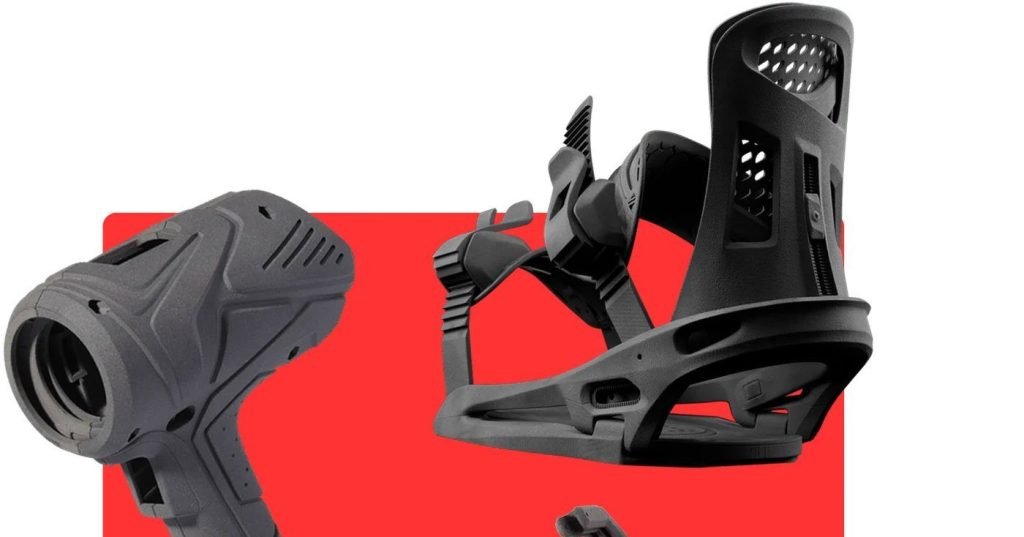
Most manufacturers don’t start by looking for an alternative to injection moulding. They start with a production problem.
Perhaps it’s a bracket that’s no longer available. A duct that’s delaying production because tooling won’t be ready for another six weeks. Or a housing required in quantities too low to justify the cost of an injection mould.
Although these scenarios are different, they all lead to the same question:
What’s the fastest and most commercially sensible way to manufacture the part?
This is where additive manufacturing can provide a genuine advantage. Not because it replaces injection moulding, but because it solves production challenges that conventional tooling often can’t.
Low production volumes, compressed lead times, obsolete components and complex geometries can all make additive manufacturing the better manufacturing route. Equally, there are many applications where injection moulding remains the right commercial decision.
At Ryse 3D, we don’t believe in forcing every project towards 3D printing. We believe in recommending the manufacturing process that best suits the application. Whether that’s additive manufacturing, injection moulding or a combination of both, our role is to help manufacturers make the right engineering and commercial decision.
From our UK facility, we manufacture, finish, inspect and deliver production-ready polymer components under one roof, giving manufacturers a single accountable supplier from quotation through to delivery.
At a Glance
If you’re manufacturing low-volume polymer components, waiting for production tooling or replacing obsolete parts, additive manufacturing can be a practical injection moulding alternative.
For high-volume production, injection moulding is often the stronger commercial choice because tooling costs can be spread across larger production runs.
The right manufacturing route depends on the component, production volume, lead time and commercial objectives.

3D Printing vs Injection Moulding: Start with the Part, Not the Process
One of the biggest misconceptions in manufacturing is that choosing a production method means choosing sides. The process should always follow the application.
If you’re producing hundreds of thousands of identical components every year, injection moulding will often be the most commercially effective solution. Once tooling has been completed, it offers exceptional repeatability and low unit costs at scale.
However, not every manufacturing programme fits that model.
Many businesses require hundreds or a few thousand parts rather than hundreds of thousands. Others need production-ready components within days rather than months, while some are replacing obsolete parts or bridging production until permanent tooling is available.
In these situations, additive manufacturing often provides a more practical solution because it removes the delays and upfront tooling costs that can slow a project down.
Ultimately, the right manufacturing process is the one that delivers the best engineering and commercial outcome, not simply the newest or most familiar technology.
Additive Manufacturing vs Injection Moulding
| Consideration | Additive Manufacturing | Injection Moulding |
|---|---|---|
| Production volume | Best suited to low and medium production runs | Best suited to high-volume production |
| Tooling investment | No production tooling required | Upfront tooling investment required |
| Lead time | Components produced directly from CAD | Production begins once tooling is complete |
| Design changes | Simple to accommodate | Tool modifications may be required |
| Complex geometry | Greater design freedom | May require design compromises |
| Bridge production | Ideal for maintaining supply | Typically follows once tooling is complete |
Neither manufacturing route is universally better.
The right choice depends on the application, production requirements and the commercial outcome you’re trying to achieve.
The value of additive manufacturing isn’t measured by replacing injection moulding. It’s measured by solving the production challenges that prevent projects from moving forward.
When an Injection Moulding Alternative Makes Commercial Sense
For some manufacturers, that means avoiding the significant investment required for production tooling. For others, it’s reducing lead times, replacing obsolete polymer components or producing geometries that would be difficult or expensive to mould.
Regardless of the challenge, the objective remains the same: keep production moving while controlling cost and risk.
Choosing the right manufacturing process isn’t about favouring one technology over another. It’s about selecting the solution that best fits the application.
When Tooling Doesn’t Make Commercial Sense
Injection moulding delivers excellent value for high-volume production because the cost of tooling is spread across thousands of components. For shorter production runs, however, that same tooling investment can represent a significant proportion of the overall project cost.
If you’re manufacturing hundreds or even a few thousand end-use polymer components, committing to tooling before production begins may not be the most commercially sensible approach.
Additive manufacturing removes that barrier by producing components directly from CAD data, eliminating the need to wait for tooling to be designed, manufactured and validated.
The result is a faster route to production, lower upfront investment and the flexibility to manufacture production-ready polymer components without the financial commitment of a mould.
When Production Can’t Wait
Sometimes the component isn’t the problem.
The lead time is. Waiting weeks for production tooling can delay an entire programme, creating knock-on effects across procurement, operations and the wider supply chain.
Bridge production helps manufacturers maintain supply while permanent tooling is being manufactured.
Rather than replacing injection moulding, additive manufacturing supports it by keeping production moving until long-term manufacturing methods are in place.
Bridge production is a good example of this approach. Instead of waiting for permanent tooling, manufacturers can continue producing components while long-term manufacturing methods are put in place. That helps reduce downtime, maintain supply and keep programmes on schedule.
When Design Flexibility Creates a Competitive Advantage
Not every design is ready for production. Testing often uncovers improvements, customer requirements change, and programmes evolve as development progresses.
Committing to tooling too early can lock those decisions in before a design has been fully validated, increasing both cost and programme risk.
Because additive manufacturing works directly from CAD data, design changes can be introduced without modifying or replacing tooling. That makes it particularly valuable during development, validation and early production, where flexibility is often just as important as production speed.
It also allows engineers to optimise components for performance, rather than redesigning them to suit the limitations of a mould. Features can be consolidated, weight reduced and complex geometries produced without the compromises that conventional tooling can sometimes require.
If you’ve ever changed a design simply because it couldn’t be manufactured using traditional tooling, you’ve already experienced those trade-offs. Additive manufacturing removes many of those constraints, allowing the application to dictate the manufacturing process, not the other way around.

The Right Process Starts with the Part
Our customers rarely come to us asking for SLS, MJF or FDM.
Instead, they come to us with a component that needs to perform, a deadline that can’t slip or a supply chain issue that needs solving.
Our role is to understand the application, recommend the most appropriate manufacturing process and deliver the best engineering and commercial outcome.
Depending on the project, that recommendation may be additive manufacturing, injection moulding or a combination of both.
That’s the difference between buying parts and working with a manufacturing partner. We focus on selecting the right process for the application rather than trying to make every application fit a particular technology.
Why Manufacturers Trust Ryse 3D
When production depends on polymer components arriving on time, experience matters.
That’s why manufacturers choose to use us at Ryse 3D.
We combine additive manufacturing with finishing, painting, inspection and quality assurance under one roof, giving manufacturers a single point of accountability from production through to delivery.
Our capability includes:
- More than 2.5 million polymer components in service
- 25 vehicle programmes supported
- PPAP 1–4 approved production processes
- ISO 9001 certified quality management
- Manufacturing, finishing, painting and inspection from one UK facility
- One supplier. One accountable team.
These aren’t marketing claims.
They’re the standards our customers expect.
More importantly, we’ll tell you when additive manufacturing isn’t the right answer.
Because our priority isn’t selling a machine.
It’s helping you manufacture the right component in the right way.

Questions Worth Asking Before You Commit to Tooling
Before investing in production tooling, take a step back and ask a few practical questions.
- How many components do you actually need?
- When do they need to be delivered?
- Is the design fully signed off?
- Would tooling delay your programme?
- Does the geometry naturally suit injection moulding?
- Is the original component still available?
- Could bridge production reduce programme risk?
- Are you choosing the process because it’s familiar, or because it’s genuinely the best fit?
The answers usually make the decision much clearer.
In some cases, injection moulding is the right choice.
In others, additive manufacturing provides greater flexibility and a faster route to production.
Sometimes both have a role to play at different stages of the same programme.
The important thing is making the decision based on engineering requirements and commercial reality, not habit.
Ready to Move Your Project Forward?
Whether you’re replacing an obsolete polymer component, planning a low-volume production run or evaluating an alternative to injection moulding, we’ll help you determine the most appropriate manufacturing route for your application.
Upload your CAD files through our Instant Quote portal and our engineering team will review your component, recommend the most suitable manufacturing process and explain the reasoning behind that recommendation.
If additive manufacturing offers the best solution, we’ll tell you. If injection moulding delivers a better commercial outcome, we’ll tell you that too.
That’s because our goal isn’t to sell a particular technology; it’s to help you manufacture the right component in the right way.
Frequently Asked Questions
Is 3D printing always cheaper than injection moulding?
No. Injection moulding is often the most cost-effective solution for high-volume production because the tooling investment is spread across larger production runs. Additive manufacturing is often the better option where production volumes are lower, lead times are shorter or investing in production tooling cannot be commercially justified.
What is the best injection moulding alternative?
There isn’t a single answer. The right solution depends on the component, production volume and application. For low-volume polymer components, bridge production, obsolete parts and complex geometries, additive manufacturing is often a practical alternative to injection moulding.
Can additive manufacturing be used for production-ready parts?
Yes. Additive manufacturing is widely used to manufacture end-use polymer components where the material, application and production volume make it the most appropriate manufacturing route.
When should I choose injection moulding instead?
Injection moulding is generally the preferred option for stable, high-volume production where the tooling investment can be justified over the life of the programme. If that’s the right solution for your project, we’ll recommend it.
What information do I need to request a quote?
Upload your CAD files through our Instant Quote portal. We’ll review your component, recommend the most appropriate manufacturing route and provide a quotation based on your project requirements.
Can additive manufacturing support bridge production?
Yes. Bridge production is one of the areas where additive manufacturing adds significant value. It allows manufacturers to maintain production while permanent tooling is being manufactured, helping reduce downtime and keep programmes on schedule.
Contact us today to discuss your requirements
Call us on +44 024 77360 144 or Email us at [email protected]