
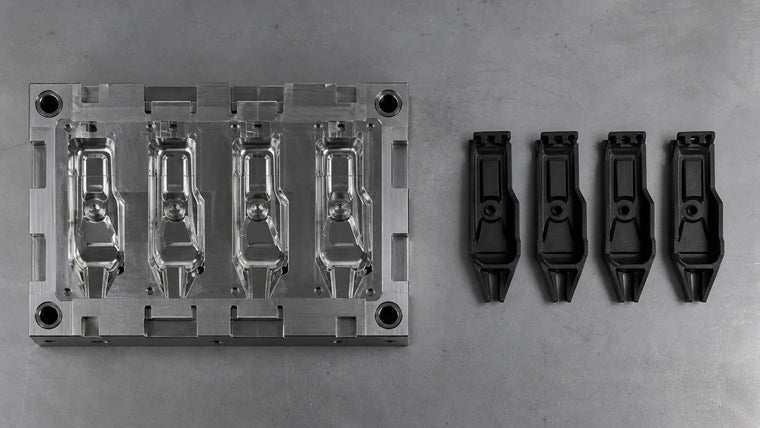
3D Printing as an Injection Moulding Alternative: When It Makes Commercial Sense
When is 3D printing a better alternative to injection moulding? An honest guide to volume, tooling cost, lead times and bridge production from a...
Read the article →Practical 3D printing guidance from a UK production bureau — not a content farm. Every article here is written by the engineers who run the machines: how to choose between SLS, MJF, FDM and SLA, what tolerances really hold, which finishing process suits which part, and how parts are actually priced. Written against our own process data, across 24 production material grades and more than 2.5 million components in service.
3D printing blog · additive manufacturing guides · material selection · design for 3D printing · UK

When is 3D printing a better alternative to injection moulding? An honest guide to volume, tooling cost, lead times and bridge production from a...
Read the article →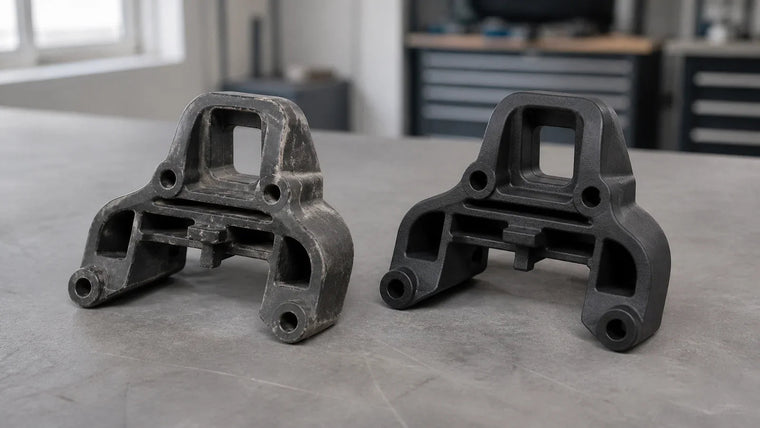
Your supplier just discontinued that part. How UK manufacturers replace obsolete and legacy polymer components with additive manufacturing - scanning, reverse engineering, first article...
Read the article →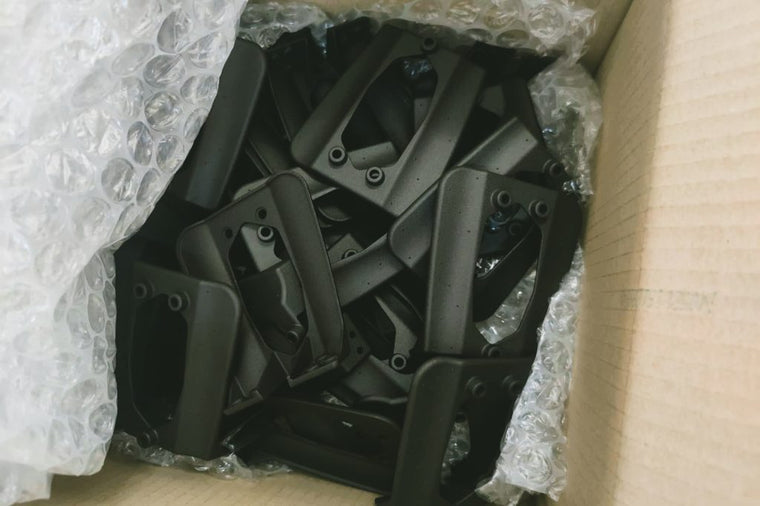
The view that FDM and MJF are prototyping technologies is a decade out of date. What production-grade additive manufacturing actually looks like in the...
Read the article →We write about the questions that actually come in on quotes — the ones where a wrong answer costs a tool, a programme slot or a redesign.
Choosing between nylons, carbon and glass filled grades, TPUs and resins on real mechanical data rather than marketing figures. Start with the material datasheets.
Wall thicknesses, clearances, hole sizes, orientation and the geometry that quietly fails on a powder-bed or FDM machine. See the design guidelines.
SLS against MJF, FDM against both, SLA where detail matters more than toughness — with the honest limits of each. Start with SLS vs MJF, or compare on the SLS, FDM and SLA pages.
Vapour smoothing, shot blasting, vibro polishing, dyeing and A-class paint — what each one does to the surface, and to the dimensions. See all finishing processes.
Why nesting density drives powder-bed cost, what makes a part expensive, and how volume changes the maths. See pricing and lead times.
How printed parts are used in production programmes — automotive, drones, robotics, marine, machine build and beyond. Browse the industries.
Reviewed by the RYSE 3D engineering team · August 2026
| If you need | Go to |
|---|---|
| Mechanical data for a material | Material datasheets — tensile, modulus, elongation and heat deflection with the ISO method cited against every value |
| Wall thickness and clearance rules | Design guidelines — minimum features, tolerances and orientation guidance per process |
| Help choosing a nylon process | SLS vs MJF — thirteen attributes compared, with an honest verdict on each |
| A surface finish decision | Finishing — including vapour smoothing, vibro polishing and shot blast polishing |
| A price and a lead time | Pricing and lead times, or go straight to the instant quote for up to 100,000 parts |
| A part in your hand | Request a sample — printed and finished parts, posted UK wide |
| A quick answer | 3D printing FAQ — ordering, file formats, tolerances, materials and lead times |
| Every article | The full article index |
Instant online pricing on up to 100,000 parts across SLS, MJF, FDM and SLA, with a free design review on every quote.
Printed, finished and inspected at our own ISO 9001 facility in Shipston-on-Stour, Warwickshire. Call us on 024 7736 0144.